Thursday, January 31, 2013

Epiphany 4C

Thursday Bible Study • 31 January 2013 • Epiphany 4C • Sunday • 3 February 2013

Introduction to this study


After announcing the words of Isaiah fulfilled in himself, Jesus reflects on the historical rejection of many who prophetically speak the truth of God’s mercy, judgment, justice, freedom and love—and human response in the Spirit. Jesus clearly recognizes himself in their tradition.

Luke 4:21-30

21 Then he began to say to them, “Today this scripture has been fulfilled in your hearing.” 22 All spoke well of him and were amazed at the gracious words that came from his mouth. They said, “Is not this Joseph’s son?” 23 He said to them, “Doubtless you will quote to me this proverb, ‘Doctor, cure yourself!’And you will say, ‘Do here also in your hometown the things that we have heard you did at Capernaum.’”

24 And he said, “Truly I tell you, no prophet is accepted in the prophet’s hometown. 25 But the truth is, there were many widows in Israel in the time of Elijah, when the heaven was shut up three years and six months, and there was a severe famine over all the land; 26 yet Elijah was sent to none of them except to a widow at Zarephath in Sidon. 27 There were also many lepers in Israel in the time of the prophet Elisha, and none of them was cleansed except Naaman the Syrian.” 28 When they heard this, all in the synagogue were filled with rage. 29 They got up, drove him out of the town, and led him to the brow of the hill on which their town was built, so that they might hurl him off the cliff. 30 But he passed through the midst of them and went on his way.

Luke 4:21-30 completes the story from Luke 4:14-21 we heard on Epiphany 3. Jesus has returned to Nazareth and is at the synagogue, participating on the Sabbath day; he reads from the prophet Isaiah, “The Spirit of the Lord is upon me, because he has anointed me to bring good news to the poor. He has sent me to proclaim release to the captives and recovery of sight to the blind, to let the oppressed go free, to proclaim the year of the Lord’s favor.” (Luke 4:18-19) The key verse in understanding this entire passage comes next, “Today this scripture has been fulfilled in your hearing.” (Luke 4:21)

Jesus is not speaking to strangers but in his own hometown, surrounded by those who had watched him grow up in the synagogue. They know Joseph. They know Jesus’ family.

1. How could Jesus make such a claim?
2. What is at the heart of the reaction of the crowd?

Jesus does not seem to be surprised or dismayed by their reaction. He almost expects it. As we know from the Old Testament, for centuries God sent prophets to speak God’s word to the people of Israel, only to have the prophets rejected. Sometimes that word of God comforted and consoled, but at other times it was a hard word to hear as the prophet called people to repentance and obedience, to return to God.

3. Why might a prophet be rejected in his or her hometown?
4. Why might a prophet be rejected in other places?
5. If the prophet brings good news and a restored relationship with God, why not listen?

Jesus reminds those in the synagogue of familiar Old Testament prophets who extended God’s goodness to non-Jews. For example, God sent Elijah to assist a poor widow in Sidon during a time of famine (1 Kings 17:8-16) and Elisha to heal Naaman, a Syrian (2 Kings 5:1-17). This does not seem to reassure anyone, but instead the people become enraged!

6. Why do the people in the synagogue react so strongly?
7. What is at the heart of their rage?

The people drive Jesus out of town and attempt to hurl him over the cliff, but Jesus is able to pass through the enraged crowd and continue on with his mission.

8. How might Jesus have felt to be rejected by his hometown synagogue?
9. What would you say to Jesus at this point (the very beginning) of his public ministry?

Jesus’ references to the widow at Zarephath and the leper Naaman the Syrian, reveals Jesus has come especially to the widows, the lepers, the outsiders. Luke tends to focus on Jesus’ ministry to the “least of these.” But we know Jesus is for everyone, and for all creation! In the stories of both Elijah and Elisha, God goes into places where most people believed God was not and in God’s holiness and otherness, God did not belong. Jesus’ words of inclusion, Jesus’ own interpretation of his ministry, evoke an almost instantaneous transition from awe to rage for the hearers of Jesus’ words. Why?

The evangelist Luke frequently presents Jesus as prophet. Later on in the gospel, Jesus as a righteous and innocent prophet will be made clear by Luke’s account of the centurion’s words at the death of Jesus—“surely, this man was innocent” (Luke 23:47). Remembering the role of the Old Testament prophets is important for this passage.

Prophets and Prophecy

In this passage, Luke uses the Greek word that’s the same as “prophet” in English. It essentially means delivering the word of God, though prophet and prophecy carry a strong connotation of “speaking truth to power” of all kinds: ecclesiastical, governmental, institutional... The Hebrew Bible brings us a trio of prophet-type words: the most frequently used nabi means to pour down – think of flowing water!

– and

describes someone pouring out the words of God. Roeh or “seer,” denotes envisioning; Hozeh also means “to see,” “to perceive.”

Where We Live

read Jeremiah 1:4-10

Baptized into Christ, we all participate in his royal, prophetic priesthood. God’s word is a word of life, of hope—of resurrection!

10. How does God call us to be prophets?
11. How do we speak God’s word of life?
12. How can we be God’s life-giving word?
13. How can we live as God’s word of life?
14. Are we open to God’s life- and world-transforming actions in our own lives?

Sunday after next we’ll conclude this season of Epiphany with the Feast of the Transfiguration, and then it’s time to settle into Lent, the 40-day long season that prepares us for Easter, as it brings its own gifts and perspectives into our lives and community. We always are in the midst of and participating in helping the blind see again, setting the oppressed and captive free, of proclaiming the “today” of the Lord’s favor in word, in action, and in just plain “being.” As we conclude this liturgical season, we carry the illuminating light of Epiphany into the sometimes dark months of Lent that yet signal Easter on the way. We think we know the rest of the story...

15. Do we trust the rest of the story?

Final thoughts: What insights have you gained in this study? Concluding remarks?

Prayer

Sunday, April 15, 2012

Lent 5 B

The Vision of Faith

This class handout is from Lent 2006, 2 lectionary year B rounds ago.

Bringing the texts together


Jeremiah 31:31-34

Internalized Gospel: now God is so immanent God truly lives in the hearts of humans; as Christians we read this as a Jesus-text; we read it as God "pitching a tent," living and sojourning with God's people! But what could this "new covenant" have meant to God's covenant people before God's incarnation in Jesus of Nazareth? To the people with whom God already had covenanted several times? Implication of "heart" in the Ancient Near East?

Contrast the law written on human hearts with the law written on stone tablets? In both cases, what is the law's content? I will be their God..." Say more about this!

Hebrews 5:5-12

"...once made perfect..." kai teleiotheis... like the "perfect" Jesus tells us to be—whole, complete, a finished creation, achieving the humanness in which God created us to live, being ourselves in the same way God cannot be other than God.

God calls, designates Jesus high priest/mediator! God calls us—how? Christians affirm the priesthood of all believers: each of us is baptized priest, prophet and sovereign. But how does each of us discern God's particular call to us at any particular moment? How is God's call to us part of God's covenant with us? God's call to be our whole, true, fulfilled selves in Christ?

John 12:20-33

Jesus dies on the scandal of a tree and the tree of death – the cross – paradoxically becomes the tree of life. Jesus promises to draw all to himself—the cross and empty tomb finish the redemption of all creation. In a reference back to the healing snake lifted up in the Exodus wilderness in Numbers 21:8-9, this gospel of John pericope is about Jesus lifted up on the cross, lifted up from the empty tomb, lifted up in the Ascension.

• And just as Moses lifted up the serpent in the wilderness, so must the Son of Man be lifted up, that whoever believes in him may have eternal life. John 3:14-15

• So Jesus said, "When you have lifted up the Son of Man, then you will realize that I am he…" John 8:28a

"I Am the snake" could be Jesus' eighth "I Am" statement!

We see the Glory of God as we "see Jesus," the Human One, lifted up on the cross. We see the fulness of the glory of the Presence of God in the weakness, vulnerability and defenselessness of Jesus dying on the cross.

Paul determined to preach only Christ crucified, to preach only the crucified Human One lifted up in glory on the cross: 1 Corinthians 2:2 Why?


"...now the prince of this world will be driven out," marking the end of the control, the literal worship, and the tyrannical supremacy of the cosmic Powers and Principalities we read about in Colossians and Ephesians.

By destroying evidence of our sins, God also has disarmed principalities and powers"] and driven out "the prince of this world," since sin no longer can accuse those who have been forgiven. Because in Christ God remembers our sin no more, just as God promised through Jeremiah, we can be whole persons. Jesus Christ has provided total redemption and forgiveness; in Christ each of us has been "made perfect!"

Paul of Tarsus notes 2

As I recently sorted through some random papers (again!), I discovered yet another handout from a bible study I facilitated a while back that I hadn't blogged and posted.

For Christians, Paul of Tarsus is a character of biblical proportions! He indisputably wrote 7 epistles, probably sometime between 50 and 60 CE: 1 Thessalonians; Galatians; Philippians; 1 and 2 Corinthians; Philemon; and Romans. His theology influenced 3 more: 2 Thessalonians; Ephesians; and Colossians (around 90 or 100 CE). In addition, the chronologically later epistle to the Hebrews (ca. 90 CE) bears unmistakable marks of Pauline theology and Christology. However, today most scholars do not consider the "pastoral" epistles genuine Paul. Written possibly as late as 125 CE, 1 Timothy, 2 Timothy, and Titus are socially very conservative; the language and content sometimes directly contradict what is found in the authentic letters. Particularly since the Reformation of the 16th century, most Christians are "Pauline Christians" at least to as great an extent as they are Jesus Christians!

In their work on multicultural evangelism, Latino theologians Justo González and Miguel De La Torre both point out Paul's name didn't "change" from Saul to Paul upon his conversion to Christianity but rather Saul was Paul and Paul was Saul - and Saul/Paul concurrently with "Saul" and "Paul" had at least two or three other names.

Since we're studying biblical personalities, here's a little about the apostle Paul: we know from reading Paul's undisputed letters and from the book of Acts that Paul was multicultural – Roman, Greek, and Hebrew/Jewish, which made him sensitive and responsive to the differences between cultures, and also aware that the Church would take differing expressions in different places. From the epistles we know how strongly Paul ran with his convictions, never backing down and always telling his readers – and his listeners – about the life-changing power of the Gospel and especially about the weakness of the Cross that is human foolishness and divine wisdom. Paul was more theologian rather than biblical scholar though only Romans, which essentially is his systematic theology, has much of what anyone would consider "system!" Lots of detours and many ramblings are hallmarks of his correspondence. There's some thought the author of Luke/Acts was Paul's amanuensis.

Today's texts all are from Acts: 4:32-37; 9:26-27; 11:19-30; 15:36-40

Acts 4:32-37

Acts 9:26-27

The following passage comes right after Peter's vision of unclean creatures telling him he's not to call anything – or anyone! – unclean: even the gentiles belong!

Acts 11:19-30

Acts 15:36-41

Sunday, September 19, 2010

Season of Creation 3C Storm Sunday

19 September 2010

Today is Storm Sunday, the third for this year's Season of Creation liturgical emphasis. With Ocean Sunday, we pondered and celebrated the earth's circulatory system. Fauna Sunday was a time to consider critters of all kinds that depend on humans for their sustenance and health, just as trees, rivers, forests and prairies do—animals are a major aspect of our interdependent world! Next Sunday, the twelfth and last will be Cosmos Sunday. Paralleling the Revised Common Lectionary, the Season of Creation includes a year for Matthew, one for Mark, and then Luke.

hurricane katrina biloxi mississippi

It feels as if especially during the five years since Katrina turned the world's eyes and hearts to the city of New Orleans and to the ineptitude of the federal government's response, every time there's a natural disaster media outlets overwhelm us with constant updates about the most recent hurricane, earthquake, oil spill, tornado or assorted "other" weather phenomena that disrupt the sometimes routine days of our lives.

In the reading from the Hebrew Bible, Job [28:21-22] inquires about wisdom, responding with words about some not readily apparent ways of being wise: “Where then does wisdom come from? And where is the place of understanding? It is hidden from the eyes of all living, and concealed from the birds of the air."

Paul's first letter to the Corinthian Church forms the second pericope or scripture selection for Storm Sunday. At first glance its relevance may seem a stretch, since Paul again is all about the cross of Calvary and again Paul recognizes the paradoxical power of weakness, vulnerability and death, along with servant wisdom found in the cross. Paul trusts the invincibility of life in the overwhelming power of resurrection. In fact, you could say that for Paul the Gospel is death and resurrection!

23we proclaim Christ crucified, a stumbling block to Jews and foolishness to Gentiles, 24but to those who are the called, both Jews and Greeks, Christ the power of God and the wisdom of God. 25For God’s foolishness is wiser than human wisdom, and God’s weakness is stronger than human strength.

Major seismic and atmospheric events can cause widespread destruction of all kinds, more often than not disproportionately impacting lives and surroundings of folks with fewer financial and other resources. It's well-known that people living in neighborhoods with more up-to-date infrastructure have better schools and get better coverage from police, fire and politicians. At 7.2 the Easter Day Sierra El Mayor geological event that shook, rattled and rolled Northern Mexico and Southern California was higher on the Richter scale than the 7.0 Haiti quake on 12 January. Alta and Baja California regions still are getting substantial aftershocks, but they warrant no more than a "did you feel that one?" while Haiti remains in chaotic disrepair and there probably never will be an accurate death count or reckoning of total costs. According to today's famous passage from Luke, the disciples "...were afraid and amazed, and said to one another, 'Who then is this, that he commands even the winds and the water, and they obey him?'

"Who is this? Even the winds and the waves obey him." Hebrew and Christian worldviews emerged from God's self-revelation within religious contexts in which people believed that far away, distant, unapproachable gods caused natural disasters and disturbances out of their anger and displeasure with humans, along with more-or-less predictably cycles and recycles of the same events. The experience of God's nascent people Israel and later those of the early Church – I'd hope our experience as 21st century Christians, too – with the God who is Creator and Lord of the waves and the winds (the desert, the savanna and the outback, and Lord of history, too...) was distinctly different! This was not a remote deity requiring sacrifice and placation, but a God so in love with creation that in Jesus of Nazareth God chose to live as a human creature. Not only has the endless recurrence of the very same thing stopped in its tracks, this God promises and provides a hope, a future and the reality of resurrection from the dead.

Job asks about wisdom; the apostle Paul tells us about God's wisdom. When the very young John Calvin pondered compiling a systematic theology, he wondered whether to begin with Divinity or with Humanity but finally decided it made no difference, since the outcome of either would be identical. Back in the days of Jesus the Nazarene it was not unusual to be talking with someone who was half mortal, half divine—the offspring of a human and a god. In Jesus Christ we find something more: a Savior, a Lord both completely mortal and completely divine; in Christ Jesus we discover that the fullness of humanity and the fullness of divinity are one and the same! Baptized into his death and resurrection and walking with Jesus in trust, we participate in his humanity and claim his divinity. Martin Franzmann's poetry sings, "Thy strong Word bespeaks us righteous, bright with Thine Own Holiness."

A blizzard or flood, tsunami or environmental accident originating oceans and continents away from where we live or a block away from home will affect all of us wherever we are. Because of our intertwined lives, last January's earthquake in Haiti wounded and broke all of us. Each of us can be counted among Deepwater Horizon's victims and survivors.

Will major meteorological events keep on happening? Without a doubt they will. "Who is this? Even the winds and the waves obey him."

Who are we, the people of God? We live baptized into Jesus Christ, so do the oceans and the breakers obey us? God calls us to be co-creators and faithful stewards of all creation, to live as agents of justice, renewal, restoration and mercy for all, in those ways and probably many others, also, to be the presence of Jesus Christ...

Thursday, August 27, 2009

summer conversation 4

4. A Eucharistic community: the Welcome Table

John 1:1, 3 In the beginning was the Word, and the Word was with God, and the Word was God. All things came into being through him, and without him not one thing came into being.

John 12:24 ...unless a grain of wheat falls into the earth and dies, it remains just a single grain; but if it dies, it bears much fruit.

1 Corinthians 11:23-24 ...our Lord Jesus on the night when he was betrayed took a loaf of bread, and when he had given thanks, he broke it and said, "This is my body that is for you. Do this in remembrance of me."

And what about "this is my body"?
And "this cup is the new covenant in my blood"?
The bread points to nourishment in that same self-giving of God
At work in my body, that is in me.
And the cup points to the new community drawn together and nourished
In my blood, that is in God's total self-giving in my death.
–Paul G. Hammer–

You choose to be made at one with the earth;
the dark of the grave prepares for your birth.
Your death is your rising, creative your word;
the tree springs to life and our hope is restored...
–Fred Kaan–

In Saxon English, the Lord provided the loaf, the bread, the essentials for sustaining life. We are baptized into the biography of the baby born in Bethlehem, House of Bread. In the Eucharist, we celebrate the ultimate earth day, a feast of justice and reconciliation for all creation, that brings together the ground's fruitful yield along with the labor of farmers, vintners, truckers, grocers, bakers, sellers, weavers and potters, carpenters and contractors.
Revelation 21:1-2a Then I saw a new heaven and a new earth…and I saw the holy city, the new Jerusalem.
Who is this Lord of the Church, this Jesus?

Consider Jesus' lifestyle of justice and inclusion along with Jesus' command "do this!"

backtracking:

1. A baptized community: Water and the Word
Galatians 3:28 There is no longer Jew or Greek, there is no longer slave or free, there is no longer male and female; for all of you are one in Christ Jesus...
Who is this Lord of the Church, this Jesus?

Consider Jesus' relationship to creation, Jesus' stewardship of all life.

2. Spaces, places, locations...

1st, 2nd, and 3rd spaces, (4th?) places in cyberspace; the liminal, the marginal and the central; thresholds, edges and centers; insiders, outsiders, strangers and friends
Romans 13:8 Owe no one anything else except to love one another...
Who is this Lord of the Church, this Jesus?

Consider Jesus' sense of home and geography.

3. Jesus, us, culture, counter culture
Colossians 2:15 Having made hash of the rulers, the powers and the principalities and having been victorious over them, Christ then made a public spectacle of them!
Who is this Lord of the Church, this Jesus?

Consider Jesus' awareness of his own culture and the customs of others.

© leahchang

Thursday, August 20, 2009

summer conversation 3

3. Jesus, us, culture, counterculture

Continuing awareness of the interdependence of all creation…

In Jesus of Nazareth God became incarnate within a particular culture, geography and historical time. And Jesus accepted death! How much more countercultural does it get?

Contexts, worldviews: natural, economic, ethnic, symbolic, class, linguistic, religious around us and within us shape us and limit where we go, what we think about, the options open to us. An individual becomes a person by becoming embedded in a textured, interwoven history of experiences shared with others. Insiders, outsiders, strangers and friends…

Contextualizing ministry, evangelism and worship. For Martin Luther, worship and hymn-singing in the vernacular was one of the marks of the true church; there are many vernaculars besides the linguistic.
1 Corinthians 12:4-7 There are diversities of gifts but the same spirit, and different kinds of ministries and ways to serve, yet the same Lord. Although there are many various types of activities and enterprises, the same God is active and works in all of them, and each person receives gifts of the Spirit for the good of the entire community.
Christus Victor: an atonement model moving away from a focus on guilt and condemnation under the law to emphasizing freedom and victory of Christ, in Christ.
Colossians 2:15 Having made hash of the rulers, the powers and the principalities and having been victorious over them, Christ then made a public spectacle of them!
Also consider 1 Corinthians 15:54-57 and…
Hebrews 2:14-15 Therefore, since the children shared in the blood and the flesh and Christ shared in the same things, that through death he might destroy the one having power over death - that is, the devil - and he might free all those who by their fear of death were bound to slavery throughout their lives.
Let the river run, let all the dreamers wake the nation. Come, the New Jerusalem. Carly Simon, "Let the River Run"
Who is this Lord of the Church, this Jesus? Consider Jesus' awareness of his own culture and the customs of others.

Next week: 4. A Eucharistic community: the Welcome Table

An inclusive meal and a feast of justice and righteousness accomplished on earth for all creation. Now I saw a new heaven and a new earth, for the first heaven and the first earth had passed away. Then I saw the holy city, the New Jerusalem…

© leahchang

Thursday, August 13, 2009

summer conversation 2

2. Spaces, places, locations…

Continuing to focus on our interdependence with all creation.

1st spaces: family, neighbors, local schools, face-to-face relationships;

2nd spaces: workplace, university, more distant and structured settings with more choices about self-revelation;

3rd spaces: traveling, affinity, trade and professional groups, social, cultural and other diversities, at times geographically further afield with potential for greater anonymity...regarding possible

4th spaces, consider cyberspace, where you can choose to reveal who and where you are, try on new ideas and even new identities.

The liminal, the marginal and the central; thresholds, edges and centers
John 1:14a And the word became flesh and tabernacled [pitched a tent, a portable shelter] among us.
Where is home for you? Geographical origins, a more recent city or town, an emotional place, treasured people and activities? How do your experiences in various locations contribute to your understanding of yourselves, of others, of the world? Our histories and stories: insiders, outsiders, strangers and friends. …in Jerusalem, in all Judea and Samaria, and to the ends of the earth!
Romans 13:8,10 Owe no one anything else except to love one another, for anyone who loves another has fulfilled the law. Love does no evil to a neighbor; therefore love fulfills the law.
Paul insists we owe, we "ought" the love of Christ to every one another and compares love for others to a debt, an ought that we owe them.
Revelation 21:1-3 And I saw a new heaven and a new earth, for the first heaven and the first earth had passed away…and I heard a tremendous voice from the throne saying, "Now God pitches a tent and lives among all humanity, and God will travel alongside all the people wherever they may go. They will be God's people, and God himself will dwell with them and be their God."
…in Jerusalem, in all Judea and Samaria, and to the ends of the earth!
Who is this Lord of the Church, this Jesus? Consider Jesus' sense of home and geography.

Next week: 3. Jesus, Us, Culture, Counterculture

God beyond time and space became incarnate for us in Jesus of Nazareth, lived among us and shared our human experience. And Jesus accepted death! How much more countercultural does it get?

We're coming to the edge, running on the water, coming through the fog, your sons and daughters. Let the river run, let all the dreamers wake the nation. Come, the New Jerusalem.

© leahchang

Thursday, August 06, 2009

summer conversation 1

1. A baptized community: Water and the Word

Consciously connecting ourselves with all creation, recognizing and celebrating our interdependence. Recognizing the countless ways in which time and space are essential conditions in which all creation lives.
Genesis 1:1-2 In the beginning when God created the heavens and the earth, the earth was a formless void and darkness covered the face of the deep, while a wind from God swept over the face of the waters.
Water is the primordial substance of being, the womb of all creation, the fundamental stuff of our rebirth and continued aliveness. Water is the physical substance of our baptism.

Baptized into the Christ Event of God's supreme self-revelation in measurable, definable space and time, we become prophet, priests and sovereigns, in stewardship of creation and of all life. Baptism engulfs us in God's creative power of death and resurrection, identifying us with this planet's history and with Jesus Christ.

Consider our relationship to the elements of air, earth and fire…

Galatians 3:28 There is no longer Jew or Greek, there is no longer slave or free, there is no longer male and female; for all of you are one in Christ Jesus…
The waters of baptism form a border and boundary between our old, disconnected, alienated existence and our new life in the community that is the Body of the Crucified and Risen Christ.

We are the body, the corpus, of Christ! Corporate Identity [package]: our logo, our résumé, our curriculum vitae, where we've been, what we've learned, what we live for and die for…who are we? Baptism transforms us from lone, solitary individuals into a position of particularity within the gathered body of Christ. Each of us brings a special history along with unique gifts and perspectives for contribution and service within church and world.

Who is this Lord of the Church, this Jesus? Consider Jesus' relationship to creation, Jesus' stewardship of all life.

Next week:

2. Spaces, places, locations…

Where is home
for you? Geographical origins, a more recent physical place or town, an emotional place, treasured people and activities of belonging? How do your experiences in various locations contribute to your understanding of yourselves, of others, of the world? 1st, 2nd, and 3rd spaces, (4th?) places in cyberspace; the liminal, the marginal and the central; thresholds, edges and centers. Insiders, outsiders, strangers and friends. …in Jerusalem, in all Judea and Samaria, and to the ends of the earth!

© leahchang

Sunday, August 02, 2009

summer conversations 2009

description:

Four casual events
bringing together the countless faith life connections! Participate in one, all four, in two or in three. As we explore and consider aspects of living together as a pentecostal community in the power of the Holy Spirit, discussions will particularly focus on the identity of Jesus Christ as Lord of the Church and our identity in Christ as the Church.

Topics may include: baptism as a countercultural event; boundaries and borders; centers, thresholds and edges of spaces and places around us and beyond us; Holy Communion as a welcome table of justice and reconciliation for all creation.

Location: Church Library

Days and dates: Thursdays August 6, 13, 20, 27

Time: 4-5 PM

Facilitator: Leah Chang

Teachers and learners: everyone

A Pentecostal community: Time of the Spirit; Season of the Church

1. A baptized community: Water and the Word

The living waters of baptism are border and boundary between our old, disconnected, alienated existence and our new life in the community that is the Body of the Crucified and Risen Christ.

There is no longer Jew or Greek, there is no longer slave or free, there is no longer male and female; for all of you are one in Christ Jesus…

Who is this Lord of the Church, this Jesus?

2. Spaces, places, locations…

1st, 2nd, and 3rd spaces, (4th?) places in cyberspace; the liminal, the marginal and the central; thresholds, edges and centers

…in Jerusalem, in all Judea and Samaria, and to the ends of the earth!

Insiders, outsiders, strangers and friends

Who is this Lord of the Church, this Jesus?

3. Jesus, Us, Culture, Counterculture

God beyond time and space became incarnate for us in Jesus of Nazareth, lived among us and shared our human experience.

We’re coming to the edge, running on the water, coming through the fog, your sons and daughters. Let the river run, let all the dreamers wake the nation. Come, the New Jerusalem.

Who is this Lord of the Church, this Jesus?

4. A Eucharistic community: the Welcome Table

An inclusive meal as well as a feast of justice and righteousness accomplished on earth for all creation.

Now I saw a new heaven and a new earth, for the first heaven and the first earth had passed away. Then I saw the holy city, the New Jerusalem…

Who is this Lord of the Church, this Jesus?


© leah chang 2009

Tuesday, June 16, 2009

summer conversations

Proposal:

Four casual events bringing together the countless faith - life connections! Participate in one, all four, in two or in three.
A Pentecostal community: Time of the Spirit; Season of the Church

1. A baptized community: Water and the Word

The living waters of baptism are border and boundary between our old, disconnected, alienated existence and our new life in the community that is the Body of the Crucified and Risen Christ.

There is no longer Jew or Greek, there is no longer slave or free, there is no longer male and female; for all of you are one in Christ Jesus…

Who is this Lord of the Church, this Jesus?

2. Spaces, places, locations…

1st, 2nd, and 3rd spaces, (4th?) places in cyberspace; the liminal, the marginal and the central; thresholds, edges and centers

…in Jerusalem, in all Judea and Samaria, and to the ends of the earth!

Insiders, outsiders, strangers and friends

Who is this Lord of the Church, this Jesus?

3. Jesus, Us, Culture, Counterculture

God beyond time and space became incarnate for us in Jesus of Nazareth, lived among us and shared our human experience.

We’re coming to the edge, running on the water, coming through the fog, your sons and daughters. Let the river run, let all the dreamers wake the nation. Come, the New Jerusalem.

Who is this Lord of the Church, this Jesus?

4. A Eucharistic community: the Welcome Table

An inclusive meal as well as a feast of justice and righteousness accomplished on earth for all creation.

Now I saw a new heaven and a new earth, for the first heaven and the first earth had passed away. Then I saw the holy city, the New Jerusalem…

Who is this Lord of the Church, this Jesus?


© leah chang 2009

Thursday, January 08, 2009

These Are The Words!!!!!

"Doing The Word" - a.k.a. The Mount Sinai Event

Study Scripture: Exodus 19:1 - 25:9
  • "Eagles' Wings": Exodus 19:1-6
  • The Lord in the cloud
  • The Commandments and the Ordinances: Exodus 20-23
  • Book of the Covenant; Blood of the Covenant: Exodus 24:3 - 25:9
  • God among us! Sanctuary, Tabernacle and Jesus!
  • Doing The Word, "Performing the Scriptures": The Word made Flesh
Walter Brueggemann on Torah:
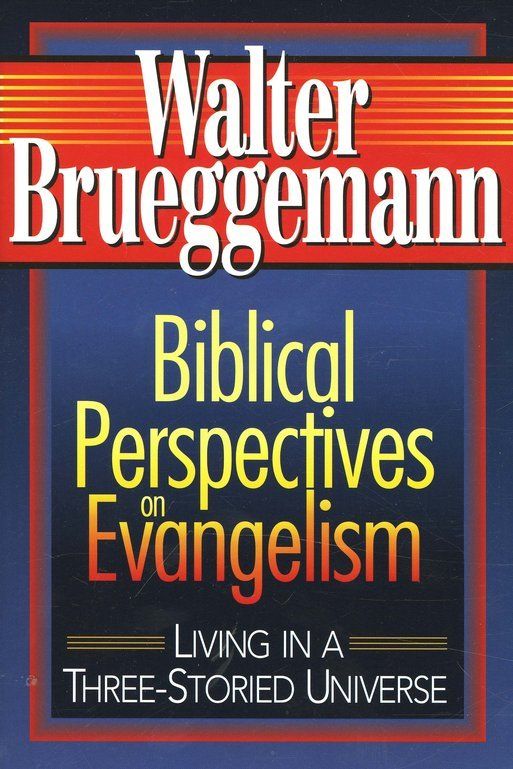
biblical perspectives cover"Torah" means the entire written and cherished normative memory of the community, all the lore and narrative and poetry and song and old liturgy that had formed and shaped and authorized the imagination of the community. In rabbinic sources, moreover, it is later urged that there is also an "oral" torah alongside what is written. The reference to "law" smacks of a Christian stereotype of Judaism which grossly misrepresents it. The mistaken stereotype entails two severe costs. On the one hand, it does a disservice to Jews and Jewish practice. On the other hand, it cuts Christians off from the vitality and dynamic of the torah enterprise which could make a positive difference to us Christians.1
1 Walter Brueggemann, Biblical Perspectives on Evangelism: Living in a Three-Storied Universe. Nashville, Abington Press, 1993, page 74.

Saturday, May 03, 2008

Paul of Tarsus notes

For Christians, Paul/Saul of Tarsus is a character of biblical proportions! He indisputably wrote 7 epistles, probably sometime between 50 and 60 CE: 1 Thessalonians; Galatians; Philippians; 1 and 2 Corinthians; Philemon and Romans. Paul's theology influenced 2 Thessalonians, Ephesians and Colossians, all 3 authored around 90 or 100 CE. In addition, the chronologically later letter to the Hebrews (circa 90 CE) bears unmistakable marks of Pauline theology and Christology. However, scholars today generally do not consider the pastoral epistles traditionally attributed to him as genuine Paul. 1 Timothy, 2 Timothy and Titus (possibly from as late as 125 CE) are socially very conservative, with language and content that at times directly contradicts what we find in the authentic letters. Particularly since the Reformation of the 16th century, most Christians are "Pauline" Christians at least to as great an extent they are Jesus Christians!

In their work on multicultural evangelism, Latino theologians Justo Gonzalez and Miguel De La Torre both point out Paul's name didn't "change" from Saul to Paul upon his conversion to Christianity but rather Saul was Paul and Paul was Saul - and Saul/Paul concurrently with "Saul" and "Paul" probably had at least two or three other names.

Since we're studying biblical personalities, here's a little about the apostle Paul: we know from reading Paul's undisputed letters and from the book of Acts that Paul was multicultural - Roman, Greek and Hebrew/Jewish, which made him sensitive and responsive to the differences between cultures, and also aware that the Church would take differing expressions in different places. From the epistles we know how strongly Paul ran with his convictions, never backing down and always telling his readers and his listeners about the life-changing power of the Gospel and especially about the weakness of the Cross of Calvary that is human foolishness and divine wisdom. Paul was far more theologian than biblical scholar or scriptorian, though only Romans, which essentially is his systematic theology, has much of what anyone would consider "system!" Lots of detours and many ramblings are hallmarks of his correspondence. There's some thought the author of Luke/Acts was Paul's amanuensis.

Acts 4:32-37

32Now the whole group of those who believed were of one heart and soul, and no one claimed private ownership of any possessions, but everything they owned was held in common. 33With great power the apostles gave their testimony to the resurrection of the Lord Jesus, and great grace was upon them all. 34There was not a needy person among them, for as many as owned lands or houses sold them and brought the proceeds of what was sold. 35They laid it at the apostles’ feet, and it was distributed to each as any had need. 36There was a Levite, a native of Cyprus, Joseph, to whom the apostles gave the name Barnabas (which means “son of encouragement”). 37He sold a field that belonged to him, then brought the money, and laid it at the apostles’ feet.

Acts 9:26-27

26When he had come to Jerusalem, he attempted to join the disciples; and they were all afraid of him, for they did not believe that he was a disciple. 27But Barnabas took him, brought him to the apostles, and described for them how on the road he had seen the Lord, who had spoken to him, and how in Damascus he had spoken boldly in the name of Jesus.

Acts 11:19-30

19Now those who were scattered because of the persecution that took place over Stephen traveled as far as Phoenicia, Cyprus, and Antioch, and they spoke the word to no one except Jews. 20But among them were some men of Cyprus and Cyrene who, on coming to Antioch, spoke to the Hellenists also, proclaiming the Lord Jesus. 21The hand of the Lord was with them, and a great number became believers and turned to the Lord. 22News of this came to the ears of the church in Jerusalem, and they sent Barnabas to Antioch. 23When he came and saw the grace of God, he rejoiced, and he exhorted them all to remain faithful to the Lord with steadfast devotion; 24for he was a good man, full of the Holy Spirit and of faith. And a great many people were brought to the Lord. 25Then Barnabas went to Tarsus to look for Saul, 26and when he had found him, he brought him to Antioch. So it was that for an entire year they met with the church and taught a great many people, and it was in Antioch that the disciples were first called “Christians.”

27At that time prophets came down from Jerusalem to Antioch. 28One of them named Agabus stood up and predicted by the Spirit that there would be a severe famine over all the world; and this took place during the reign of Claudius. 29The disciples determined that according to their ability, each would send relief to the believers living in Judea; 30this they did, sending it to the elders by Barnabas and Saul.

Acts 15:36-41

36After some days Paul said to Barnabas, “Come, let us return and visit the believers in every city where we proclaimed the word of the Lord and see how they are doing.” 37Barnabas wanted to take with them John called Mark. 38But Paul decided not to take with them one who had deserted them in Pamphylia and had not accompanied them in the work. 39The disagreement became so sharp that they parted company; Barnabas took Mark with him and sailed away to Cyprus. 40But Paul chose Silas and set out, the believers commending him to the grace of the Lord. 41He went through Syria and Cilicia, strengthening the churches.

Tuesday, April 15, 2008

imaging and enacting heaven on earth

A single Sunday morning worship service, preferably no later than 10:00, probably would help encourage inquiring newcomers to return and also benefit those of us who like to attend adult bible study. To get my own bias out of the way, despite my preference for musically blended worship I detest most 19th century hymnody, which is what usually happens at the traditional end of most blended worship, so unless we're having a dollop of North German baroque along with some harmonically discordant, rhythmically asymmetrical 20th-21st century music that sounds very unlike many people's idea of conventional church music, I'm cool with mostly praise music.

However, my primary concern is that we at Old Condo Shadows and in all churches offer public worship that reflects and embodies God's incarnation and Self-giving in Jesus Christ, which clearly happens whenever we celebrate a baptism or the Lord's Supper, but it also becomes possible with a carefully constructed order of worship sourced from scripture and history—including our own history here on this mesa.

As Christians, God's people in Jesus Christ, each Sunday is a day of resurrection, a time especially to remember who we are, Whose we are and Who has called us by retelling and re-enacting the meta-narratives of redemption, of deliverance from death to life in the Exodus and Passion/Easter stories within the context of public Lord's day worship; in these stories we find healing memory and discover hope for a free future. As we invite our neighbors and other people who don't have much church experience, we're hoping to meet and to reach them where they are and speak in a language they'll understand, which can be a precarious endeavor. But did God ever call the people of God to live in ways congruent with their local cultures? Or in a radically culturally incongruent, actually counter-cultural manner? Are we presenting inquiring newcomers with a choice, a real alternative to costly and deathly consumerism and related excesses? Are we telling and showing the world something very different from anything they've previously experienced? Do we dare imagine we can domesticate the wildness of Jesus? For sure it is about the ways our lives demonstrate faithfulness and obedience to the God Who covenants with us in Jesus, but it is equally about how together we worship the Crucified and Risen One, and it may require some explanation and interpretation, not only for so-called outsiders but also reminders for the insiders among us. It is strange; in many ways it is wholly "other than", this reality of a people (us!) who already have experienced their first death and their second birth, this reality of seemingly regular, ordinary, everyday people who follow a crucified outcast, trusting the God Whose ultimate word is resurrection from the dead.

I'm asking questions rather than offering answers, and I'll conclude by asking if our presence in our neighbors' lives and in the world beyond this corner of Paradise can be partly in our own world, partly in our neighbors', and wholly in the sovereignty of heaven? Can our Sunday worship reflect such a way of life? There are no easy, instant answers, and we'll need to anticipate a lot more changes as the months unfold.

Friday, December 14, 2007

God Among Us discussion 04

I've posted the first three classes in this series on desert spirit's fire; this last class is a review and roundup, so I'm posting it here.

Advent 1: Historical Witness – Creation and Prophets

Advent 2: Historical Witness – Jesus Christ

Advent 3: Liturgy, Word, Sacrament

Advent 4: Contemporary Witness – us and our neighbors

Backtrack

Abraham, Jesus, us—from the other side of the dominant social and economic culture of consumerism and exorbitant consumption; from the other side of death…alive in Jesus Christ!

2 Samuel 7:5-6 "I have not dwelt in a house from the day I brought the Israelites up out of Egypt to this day. I have been moving from place to place with a tent as my dwelling.'"

John 1:14 And the word became flesh and tabernacled, pitched a tent among us...

Creation

Genesis 1:1 - 2:4 God creates humanity in a multifaceted Image of the Divine; God's attributes and our attributes include holiness, justice, righteousness, servanthood and creativity. Yahweh's specialty was constant, unmediated presence with creation. How about us?

Acts 1:1-8 …they asked him, "Lord, is this the time when you will restore the kingdom to Israel?" He replied… "you will receive power when the Holy Spirit has come upon you; and you will be my witnesses in Jerusalem, in all Judea and Samaria, and to the ends of the earth."

RCL Advent 3A: Matthew 11:2-11 "Are you the one who is to come?" "Go and tell John what you hear and see: the blind receive their sight, the lame walk…and the poor have good news brought to them…"

Historical and contemporary

Exodus 5:1 Afterward Moses and Aaron went to Pharaoh and said, "Thus says the Lord, the God of Israel, 'Let my people go, so that they may celebrate a festival to me in the wilderness.'" The church gathers as the community that already has experienced its first death and second birth, fully alive under the subversive Lordship of Jesus Christ and called to live in a radically culturally incongruent, actually counter-cultural manner. An individual becomes a person by becoming embedded in a textured, connected, interwoven history of shared experiences and different viewpoints; there is no other way to create a humanly connected sense of your own identity, form memories and become part of history. Baptism and the Lord's Supper are cosmic events in each of our lives and part of our transformation from individual into person.

In worship, especially when we celebrate the sacraments, we anticipate, celebrate and commemorate and carry with us a microcosm of a redeemed world, a living and a life-giving memory of Jesus. In us, Jesus again becomes alive in the world and we offer the world a living connection to the heaven of God's Reign here on earth.

Liturgy, time; Sacraments, space and matter

Liturgy - Holy Time:
remembering Whose we are! Who has called us! We recall, retell and re-enact our corporate and individual histories of the journey from death into life.

Sacraments - Holy Place and Holy Stuff—sacred creation: re-membering who we are! The person and communities God has called and enabled us to be and to do.

Corporate Identity Package; God's call to us

We are the body, corpus, of Christ! Each of us is a member of the body of Christ. Jesus Christ incarnate, re-enfleshed in us. Corporate Identity [package]: our logo, our résumé, our curriculum vitae, detailing where we've been, what we've learned, what we live for and die for...who are we? In Christ, we have experienced our second birth and our first death. We live under the reign of life rather than in the enslavement, the subjugation of death.

Baptism: primal experience, water, womb;

Romans 6:3-10

Eucharist:
we find sacred memory and discover hope for a free future in the meta-narratives of redemption, of deliverance from death to life in the Exodus and Passion/Easter stories. Theologian Jürgen Moltmann describes baptism as "sign, witness, representation and illumination of the Christ Event," and we can claim the same about the Eucharist. We know Jesus Christ as sovereign, prophet and priest; baptized, we participate in that royal, prophetic priesthood. In the Eucharist, the church in every place and every time blesses and reintegrates all creation in every place and time.

1 Corinthians 11:23-28

Liturgy: holy time - remembering Whose we are

Sacraments: holy space - re-membering who we are

Time and space
are the conditions in which all creation lives. Living within the cycle of the liturgical year as it replicates the history of God and the people of God and celebrating the sacraments within that context helps refocus time and space as the necessary environment of God's revelation to us as human creations. How does the Divine Presence enter our lives in decayables such as human speech, grain, grape, memory and music?

Neighbors, co-workers, family, assorted "others"

Jesus' presence in our lives often becomes a two-way street in which we are both guests and hosts to each other; they are guest and host to us, also. Our experiences? Do we need to be open, or does God open our eyes in surprise? Both/and, maybe?

Living on the limen, the threshold

Can our presence in the world and in our neighborhoods be a liminal, in the process of becoming, though not-quite-yet one? Partly in our own world and way, partly in theirs, and wholly in the sovereignty of heaven?

© leah chang